
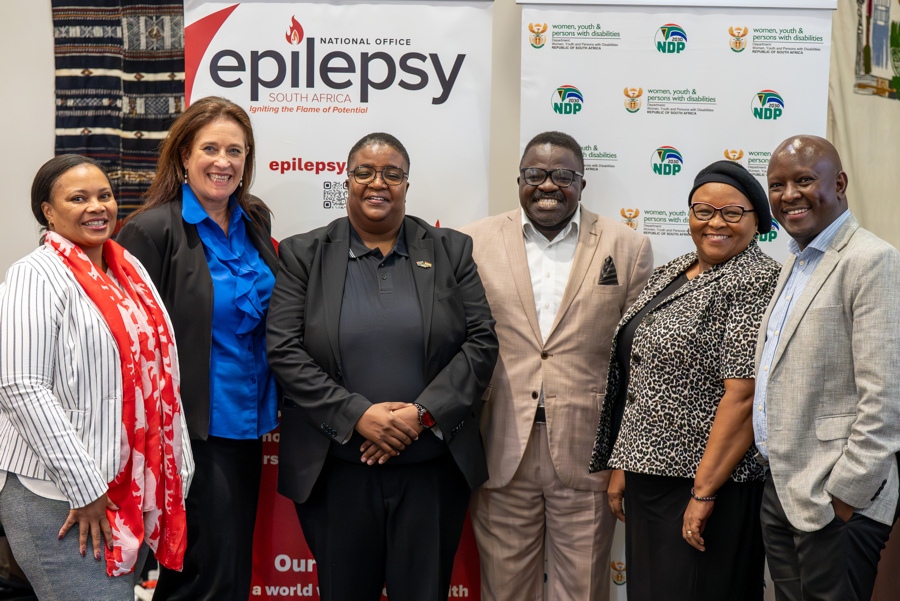
Our dynamic speakers included (from left) Mrs Phuti Mabelebele (DWYPD), Mrs Sharlene Cassel (Epilepsy SA), Deputy Minister Mmapaseka Steve Letsike DWYPD), Action Amos (IBE Africa), Dr Busi Ndlovu (Department of Health) and Dr Joseph Mwangi (WHO SA).
The SAINAP Inclusive Stakeholder Forum, hosted at Wits University on 31 March and 1 April 2025, marked a defining moment in South Africa’s journey to improve the lives of people with epilepsy and other neurological conditions. Organised by the Department of Women, Youth and Persons with Disabilities (DWYPD) alongside Epilepsy South Africa, the event brought together a broad spectrum of stakeholders from government, civil society, academia, and international partners to advance the South African Intersectoral National Action Plan (SAINAP).
This forum is aligned with the World Health Organization’s Intersectoral Global Action Plan (IGAP), a groundbreaking initiative adopted by 194 countries to promote a rights-based, person-centred approach to neurological health. South Africa’s commitment to this vision was evident in the robust participation across sectors and the focus on collaborative action.

Honourable Deputy Minister, Mmapaseka Steve Letsike, from the South African Department of Women, Youth and Persons with Disabilities, addresses the SAINAP Inclusive Stakeholders Forum in Johannesburg, South Africa.
Deputy Minister Letsike’s Address: A Call to Action
A highlight of the forum was the keynote address by the Honourable Deputy Minister, Mmapaseka Steve Letsike, from the South African Department of Women, Youth and Persons with Disabilities.
The Deputy Minister passionately reaffirmed the SA government’s commitment to disability inclusion, stressing that neurological health must be integrated into all spheres of policy and practice. She emphasised that mainstreaming the needs and rights of persons with disabilities is not just a social imperative, but a constitutional and ethical one.
Deputy Minister Letsike called for the rapid development of robust monitoring and evaluation systems to ensure that progress is tangible and measurable. She urged all departments and partners to work together in realising the ambitions of SAINAP, highlighting that effective implementation requires not only policies and plans, but also dedicated resources and sustained partnerships. Her address was both a rallying cry and a reminder: the success of SAINAP depends on national unity and commitment at every level.
Forum Insights & Next Steps
Key topics included the journey towards IGAP adoption, updates on the SAINAP draft, and strategies for increasing inclusion and empowerment for persons affected by neurological conditions. Presentations by Ms Molamu and Ms Cassel highlighted achievements in funding and collaboration, the importance of data-driven approaches, and the need for clear policy direction.
Attendees engaged in four focused Commissions addressing key objectives: policy and legislation, carer support, awareness and education, and research. Each commission worked to secure broad input for the finalization of SAINAP, with a particular focus on aligning with constitutional values of equality and non-discrimination.
With the Deputy Minister’s vision at the forefront, the forum concluded with renewed energy and a united sense of purpose. The event set the foundation for cabinet approval and successful implementation of SAINAP—ensuring that the rights, dignity, and inclusion of people with neurological conditions are at the heart of South Africa’s public health agenda