
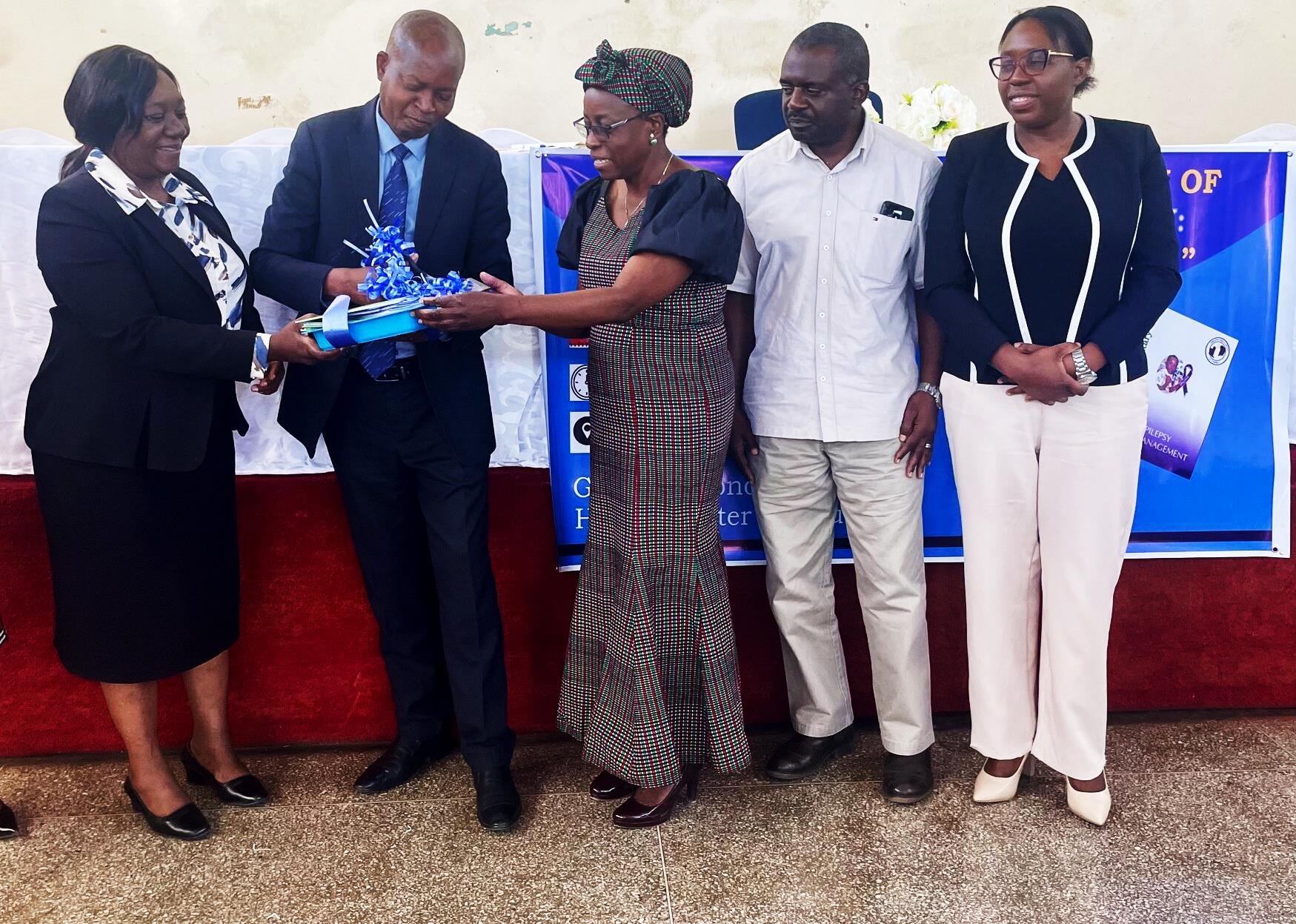
On September 6, 2024, the Epilepsy Association of Zambia (EAZ) launched an educational booklet titled, A Guide for Teachers – Stamping Out Stigma in Schools Through Correct Information About Epilepsy. The launch, held at Nakatindi Hall, Lusaka Civic Centre, was a major milestone in addressing epilepsy-related stigma in schools. The booklet, developed through a consortium project involving Zambia, Malawi, and Lesotho, was supported by the International Bureau for Epilepsy (IBE) and the BAND Foundation.
The event was graced by key dignitaries, including the Permanent Secretary for Education Services, Mr. Joel Kamoko, representing the Minister of Education. Mr. Kamoko emphasized the importance of teachers being well-informed about epilepsy, particularly in light of Zambia’s free education policy, to ensure all students, including those with epilepsy, have equal opportunities. He urged teachers to use the booklet to dispel myths, eliminate bullying, and promote inclusivity in schools.
Dr. Margaret Chibowa, from the Ministry of Health, also spoke at the event, affirming the Ministry’s support and highlighting the booklet’s role in providing practical guidance to teachers. Dr. Gabriel Walubita of the University of Zambia’s Special Needs Resource Centre shared a moving story of a girl named Mwansa, whose epilepsy led to fear and rejection due to a lack of awareness at her school. He stressed the critical importance of equipping teachers with the right knowledge to handle epilepsy cases compassionately and effectively.
The booklet, which will be distributed to schools across Zambia through District Education Boards, is seen as a crucial tool in the fight against epilepsy stigma. Kenneth Banda, a teacher and person with epilepsy, delivered a heartfelt vote of thanks, sharing his personal experiences with stigma and expressing hope that the booklet would lead to greater acceptance and understanding in schools.
This launch marks a significant step forward in creating a supportive educational environment for children with epilepsy in Zambia.